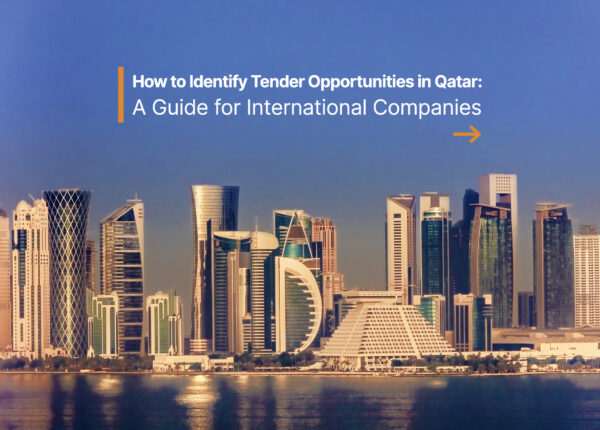
Navigating Qatar’s Investment Landscape: A Strategic Guide to Business Licensing for Foreign Entities
Qatar has firmly established itself as a beacon of economic resilience and opportunity in the Middle East. Driven by the ambitious Qatar National Vision 2030, the nation is actively diversifying its economy, moving beyond hydrocarbons to foster innovation, attract foreign direct investment (FDI), and build a knowledge-based society. For foreign entities considering expansion into this dynamic market, understanding the business licensing framework is the crucial first step towards unlocking unparalleled potential.
Qatar’s Evolving Investment Environment: Why Now?
Post-FIFA World Cup 2022, Qatar has amplified its efforts to enhance its business ecosystem. Significant investments in infrastructure, a robust legal framework, and a strategic location bridging East and West make it an attractive hub for global businesses. The government’s proactive approach to easing market entry, coupled with a stable political and economic environment, positions Qatar as a prime destination for long-term growth and strategic partnerships. Industry trends show a clear focus on technology, sustainability, logistics, manufacturing, and tourism – sectors where foreign expertise is highly valued.
Key Pathways for Business Licensing in Qatar
Foreign entities looking to establish a presence in Qatar have several distinct pathways, each offering unique advantages depending on the nature of their business and strategic objectives:
1. The Ministry of Commerce and Industry (MOCI)
The MOCI is the primary regulatory body for most businesses operating in mainland Qatar. The most common structure for foreign investors here is a Limited Liability Company (LLC), or W.L.L. (With Limited Liability). Historically, this required a 51% Qatari shareholder. However, recent reforms, particularly Law No. 1 of 2020, have broadened the scope for 100% foreign ownership in various sectors. These sectors typically include:
- Agriculture
- Manufacturing
- Health
- Education
- Tourism
- Information Technology
- Consultancy Services
- Sports
- Logistics
This liberalization signifies Qatar’s commitment to attracting specialized expertise and advanced technologies, aligning with its economic diversification goals.
2. Qatar Financial Centre (QFC)
The Qatar Financial Centre (QFC) provides a robust legal and business platform for financial and non-financial service companies. Operating under its own legal and regulatory framework based on English common law, the QFC offers:
- 100% foreign ownership: No local partner required.
- Competitive tax environment: A corporate tax rate of 10% on locally sourced profits.
- Ability to repatriate profits: No restrictions on repatriation of capital and profits.
- Global recognition: A well-respected and transparent regulatory environment.
The QFC is ideal for firms in banking, asset management, insurance, FinTech, professional services, media, and various other business services aiming for regional and international reach.
3. Qatar Free Zones (QFZ)
Managed by the Qatar Free Zones Authority (QFZA), these zones – specifically Ras Bufontas and Um Alhoul – are designed to attract companies in specific strategic sectors such as logistics, emerging technologies, advanced manufacturing, and food processing. The QFZs offer compelling incentives, including:
- 100% foreign ownership: Full control over operations.
- Tax exemptions: Up to 20 years on corporate tax.
- No customs duties: On imports of goods into the free zones.
- State-of-the-art infrastructure: World-class facilities and connectivity.
- Access to global markets: Proximity to Hamad International Airport and Hamad Port.
These zones are particularly attractive for businesses seeking to leverage Qatar’s strategic location for manufacturing, export, and distribution across the MENA region and beyond.
Strategic Considerations for Foreign Investors
Choosing the right licensing pathway involves careful consideration of several factors:
- Business Activity: Does your core business align more with mainland regulations, QFC’s service focus, or QFZ’s strategic sectors?
- Ownership Structure: Is 100% foreign ownership essential, or is a local partnership beneficial for market penetration?
- Market Access: Do you intend to serve the domestic Qatari market, or is your primary focus on regional/international operations?
- Tax Implications: Understanding the tax regimes of each pathway is crucial for financial planning.
- Long-Term Goals: Aligning your entry strategy with your broader regional and global expansion plans.
The Qatari Holding Company Advantage: Your Partner in Growth
Navigating the nuances of Qatar’s business licensing landscape can be complex. This is where the strategic guidance of an experienced Qatari holding company becomes invaluable. As a prominent Qatari holding company, we possess deep market insights, extensive local networks, and a thorough understanding of the regulatory framework across MOCI, QFC, and QFZ.
Our expertise extends to:
- Market Entry Strategy: Advising on the optimal legal structure and licensing pathway tailored to your business goals.
- Local Partnership Facilitation: Identifying and structuring strategic partnerships that comply with local regulations and accelerate market integration.
- Regulatory Compliance: Guiding you through all necessary approvals and documentation, ensuring a smooth and efficient setup process.
- Operational Support: Offering support beyond licensing, including access to office space, talent acquisition, and ongoing business development.
Conclusion
Qatar stands as a land of immense opportunity for foreign entities seeking growth, innovation, and strategic market access. With a clear vision for economic diversification and a welcoming environment for investors, the nation offers compelling reasons to establish a presence. By understanding the available licensing pathways and leveraging local expertise, foreign businesses can confidently embark on their journey to success in Qatar, contributing to and benefiting from its remarkable economic trajectory. We invite you to explore these opportunities with a trusted local partner, ensuring your venture is built on a foundation of solid strategy and seamless execution.
 ADCT Services